FAMILY & IDENTITY
# You are obsolete, Amma!
14 Oct 2026 • 9 min read
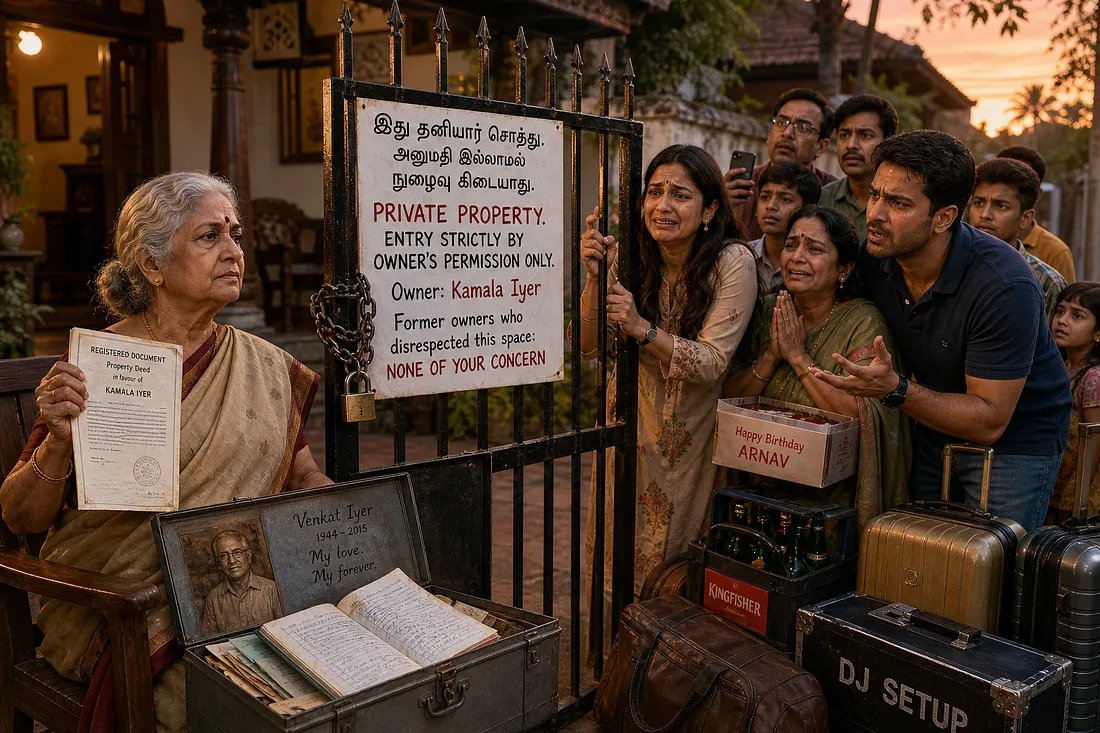
A mother’s day saga.
My daughter removed me from the family WhatsApp group and said, “Amma, that group is for people who actually matter, you wouldn’t get it.” One week later, all fifteen of them showed up at my ancestral home with luggage, barbecue grills, beer crates, and the audacity of people who thought forgiveness was their birthright.
The locked gate hurt them more than my silence ever had.
The notice board beside it made my son-in-law's smirk disappear.
And the old steel trunk in my arms made my daughter's confidence crumble like ash.
My name is Kamala Iyer.
I am seventy-three years old. I have been a widow for nine years. And until that week, I still believed that breaking yourself into pieces for people meant they would cherish those pieces.
They did not.
When my daughter Ananya removed me from the family group, my world didn't just tilt—it shattered.
I remember staring at my phone screen, my arthritic fingers trembling as I kept refreshing, kept hoping the messages would reappear. That maybe my old Samsung had glitched. That maybe love hadn't actually disappeared with one administrative click.
Then I called her.
My voice was already breaking before she answered.
“Anu, beta... why can't I see our family chat anymore?”
She exhaled like my existence was an interruption to her actual life.
“Amma, please don't make this bigger than it is. That group is for people who actually work, who understand real-world problems. You... you wouldn't get half the things we discuss.”
People who actually work.
I looked down at my hands.
The same hands that had scrubbed floors in other people's homes when her father's printing press failed. The same hands that had stitched blouses at midnight for thirty rupees each so Ananya could attend Bharatanatyam classes in the best dance school in Chennai. The same hands that had sold my mother's gold bangles—the only inheritance I had—so my son Karthik could study computer science in Bangalore.
But I swallowed the words that wanted to scream.
A mother is taught that suffering in silence is love's truest form.
My husband, Venkat, and I built our ancestral home from dreams and desperation. Not from family wealth. Not from easy loans. From selling vegetables door-to-door in scorching Madurai summers, from skipping meals so our children wouldn't know hunger, from nights spent calculating if we could afford both rice and dignity.
Every jackfruit tree in that compound held my tears.
Every crack in the red oxide floor knew my prayers.
The front courtyard still had the kolam patterns I drew every morning at 5 AM for forty-seven years.
The kitchen still smelled of tamarind, curry leaves, fresh coconut, and the sambhar I perfected because Venkat said it tasted like home.
But for my children, that home had transformed into something transactional.
A free vacation resort.
A weekend party venue where they didn't even need to RSVP.
A place where they arrived with their entire friend circle, their bratty children, their portable speakers blasting songs I didn't understand, their expensive liquor hidden in grocery bags like I was too senile to notice, and absolutely zero shame.
They never asked, “Amma, did you eat?”
They demanded, “Is the AC working in all the rooms?”
They never asked, “Amma, do your knees hurt?”
They complained, “Why isn't there hot water in the bathroom?”
They never asked, “Amma, can we visit?”
They announced, “We're coming this weekend. Keep everything ready.”
And like the fool that unconditional love makes you, I always left the spare key under the clay pot beside the tulsi plant.
I made lemon rice and curd rice.
I swept every room until my back screamed.
I scrubbed bathrooms their children would dirty in minutes.
I cooked adai for breakfast, sambar for lunch, rasam for dinner, and dosas for whoever woke up demanding “fresh food” at odd hours.
They called it “quality family time.”
I called it the price of not being abandoned completely.
Then, the day after Ananya removed me from the group like I was spam, my daughter-in-law Divya sent a private message.
Not even a voice note. Just cold text.
“Amma, leave the keys where you always leave them. We're all coming Friday. It's Arnav's birthday, so we're doing a full weekend party. Around 15 people. Keep fish and chicken ready. Thanks.”
No “please.”
No “how are you doing?”
Not even a “hope this is okay?”
Fifteen people.
FIFTEEN.
They had planned an entire birthday celebration at my house—a house I built with my sweat and my husband's blood—without even including me in the conversation.
That was the moment something inside me didn't just break.
It burned.
I took an auto to the ancestral home one day before they planned to arrive.
Raman, our old caretaker who'd worked for us for thirty years, opened the gate and saw my face. He didn't ask questions. Men who've witnessed decades of silent suffering know when to just bring ginger tea and leave.
On the center table in the living room sat Venkat's steel trunk.
The same trunk he'd bought from a scrap dealer and polished himself until it shined. Inside it, we had preserved everything that mattered for fifty-two years.
Medical bills from when Ananya had dengue and we sold our scooter to afford her treatment.
Karthik's school certificates that Venkat had laminated himself, tears in his eyes with pride.
The loan documents from when we borrowed money at brutal interest rates so our children wouldn't know poverty.
The register where we'd noted every paisa spent on their education, their weddings, their “emergency” needs that were never emergencies.
The names of relatives who helped us when we were drowning.
The names of children who never visited those relatives' funerals.
It wasn't just a trunk.
It was evidence. Of love. Of sacrifice. Of the price we paid so they could have lives that made them too busy for us.
Ananya arrived that evening without even calling first.
She walked in like she was inspecting her investment property.
She didn't touch my feet.
She didn't ask why I was sitting there alone.
She just looked annoyed.
“Amma, what are you doing here? We're coming tomorrow with everyone. You should be home resting, not creating unnecessary drama.”
Unnecessary drama.
In the house where I'd lived my entire married life.
Without asking if I wanted fifteen strangers celebrating in my sacred space.
My voice came out steadier than I expected.
“You removed me from the family group.”
She rolled her eyes with that specific cruelty that educated children perfect—the kind that makes you feel stupid for having feelings.
“Amma, God, don't start your emotional blackmail again. We removed you because you don't understand our conversations. You get confused with work talk and friend jokes. It's better this way. Less stress for you.”
Then she noticed the steel trunk.
She picked up the register on top, flipped through two pages, and actually laughed.
“What is this ancient stuff? Bills from 1989? Amma, why do you hoard garbage like this? No wonder this place feels like a museum.”
Before I could stand, before I could breathe, she tossed it back into the trunk.
Like it was nothing.
Like Venkat's handwriting—shaky in his final years but still determined—meant nothing.
Like our entire existence was just clutter in the way of her Pinterest-perfect birthday party.
“You should really declutter before everyone arrives,” she added, checking her phone. “The place smells old. Like mothballs and the past. Can you at least light some scented candles or something?”
She left without looking back.
I sat there as the sun set, holding that register against my chest.
I didn't cry. For the first time in nine years of widowhood, I didn't cry.
I felt something sharper than grief.
Clarity.
Because Ananya had forgotten something crucial.
Venkat never kept the most important documents where children could find them.
Under the loose tile in our bedroom, wrapped in my old wedding saree—the silk one I'd never worn after his death—lay the papers my children had never bothered to ask about.
The will that Venkat had updated three months before his heart attack.
The property documents that showed whose name the house was actually registered under.
The registered letter that could turn their “family vacation home” into a reality they'd never imagined.
I didn't sleep crying that night.
I slept planning.
The next evening, they arrived like a baraat.
Four cars.
Designer luggage.
Children with iPads.
Divya carrying a cake in a fancy box.
Ananya's husband Rohit unloading a professional DJ setup like this was a nightclub.
Karthik filming everything for Instagram stories I'd never be tagged in.
They stopped at the gate.
The key wasn't under the clay pot.
A new iron chain wrapped around the gate.
A heavy lock hung in the middle like judgment.
And beside it, on a white board I'd painted myself with hands that shook with rage, not age, were these words in Tamil and English:
PRIVATE PROPERTY. ENTRY STRICTLY BY OWNER'S PERMISSION ONLY.
Owner: Kamala Iyer
Former owners who disrespected this space: NONE OF YOUR CONCERN
First, they laughed.
Then they called me childish.
Then dramatic.
Then “mentally unstable.”
I sat on the wooden easy chair just inside the gate—Venkat's chair, where he'd read newspapers every morning—with Raman standing beside me like a soldier, and the steel trunk open on my lap.
Ananya gripped the gate bars, her perfectly manicured nails looking like claws.
“Amma, this is ridiculous! Stop this stupid drama and open the gate right now! We have guests! Arnav's friends are coming! What will people think?!”
I turned one page in the register.
Her voice caught in her throat.
Because on that page was her own signature.
From eight years ago.
On a document she'd signed without reading properly.
Under a paragraph Venkat had written in red ink, his hands probably shaking with the knowledge of his failing heart:
“If our children ever treat this house like a hotel and their mother like a caretaker they can dismiss, show them page 89 of the register, and then show them the papers under the bedroom tile.”
Ananya's face went white.
Karthik pushed forward. “What papers? Amma, what is she talking about?”
I stood up, my knees aching but my voice strong.
“The papers that show this house was transferred entirely to my name one month before your father died. The papers that show you both signed as witnesses, agreeing that this property would remain mine alone, with no claim from children who ‘might one day prioritize their own lives over their mother's dignity.’”
I pulled out the registered document.
Their lawyer friend in the car started reading it over Rohit's shoulder.
His face confirmed what they were beginning to understand.
“The papers that show,” I continued, my voice breaking but not stopping, “that your father knew. He knew how you were changing. How visits became demands. How love became transactions. How his wife would become invisible while his house became convenient.”
Divya started crying. “Amma, please, the cake will get spoiled—”
“LET IT SPOIL!” My voice cracked the evening air like thunder. “Let it rot like my heart rotted every time you made plans in my house without including me in the conversation! Let it waste like I wasted years thinking service was the same as being seen!”
Karthik's voice was small. “Amma... we didn't mean—”
“YOU REMOVED ME FROM THE FAMILY GROUP!” The words finally exploded. “You removed me like I was spam! Like I was a bot! Like the woman who sold her bangles so you could have a future was too stupid to understand your present!”
The children in the cars had stopped playing. Everyone was staring.
I pulled out one more paper. The latest one.
“This is from last week. A legal notice sent to both of you. This house is now registered as a heritage property under my sole ownership. If I choose, I can will it to charity. If I choose, I can sell it. If I choose...”
I looked at both of them.
“I can lock it forever and let our memories die inside while I spend my last years in an old age home, alone, just like you were training me to be anyway.”
Ananya's tears were real now. “Amma, please... we made a mistake... we're sorry...”
“Your father died believing you loved me. Don't make his death a lie too.”
I closed the trunk.
Turned my back.
Walked into the house with Raman.
Behind me, I heard Arnav ask, “Amma, why is Paati crying?”
And Divya had no answer.
Because how do you explain to a child that adults forget how to be human?
That night, I sat in Venkat's chair, holding his photograph.
“They'll learn,” I whispered. “Or they won't. But I'm done teaching at the cost of my soul.”
The gate stayed locked.
The key stayed with me.
And for the first time since Venkat died, I slept without the weight of being useful crushing my chest.
I slept like a person.
Not a service.
Not a convenience.
A person.
Who finally chose herself.
Epilogue whispered in tears:
They came back the next day. Without the cars. Without the crowd. Just my two children, sitting outside the gate like they used to sit as kids when they were locked out for coming home late.
Ananya was crying. Real tears. Not performance.
“Amma... we forgot you were a person. We forgot you had feelings. We just... got used to you always being there. Always saying yes. Always... loving us more than you loved yourself.”
Karthik's voice broke. “We're sorry. We're so sorry.”
I didn't open the gate.
But I sat on the other side.
And for the first time in years, we talked.
Not about what they needed.
About what I'd lost.
The gate is still locked.
But maybe...
Maybe one day...
They'll earn the key.
Not to the house.
To being family again.
More Blogs
LETTER TO OUR POLITICIANS
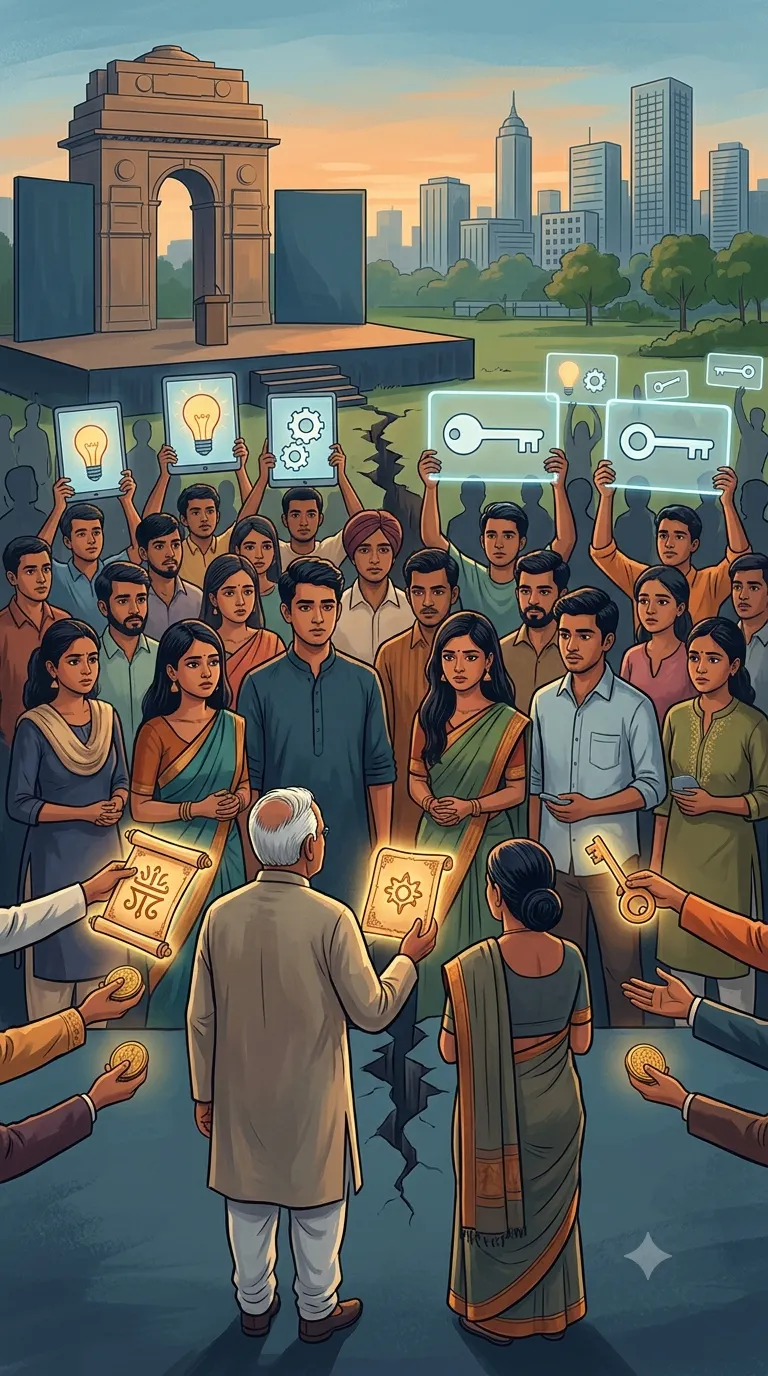
Dear Leaders and Custodians of Governance
HAPPY FRIENDSHIP DAY
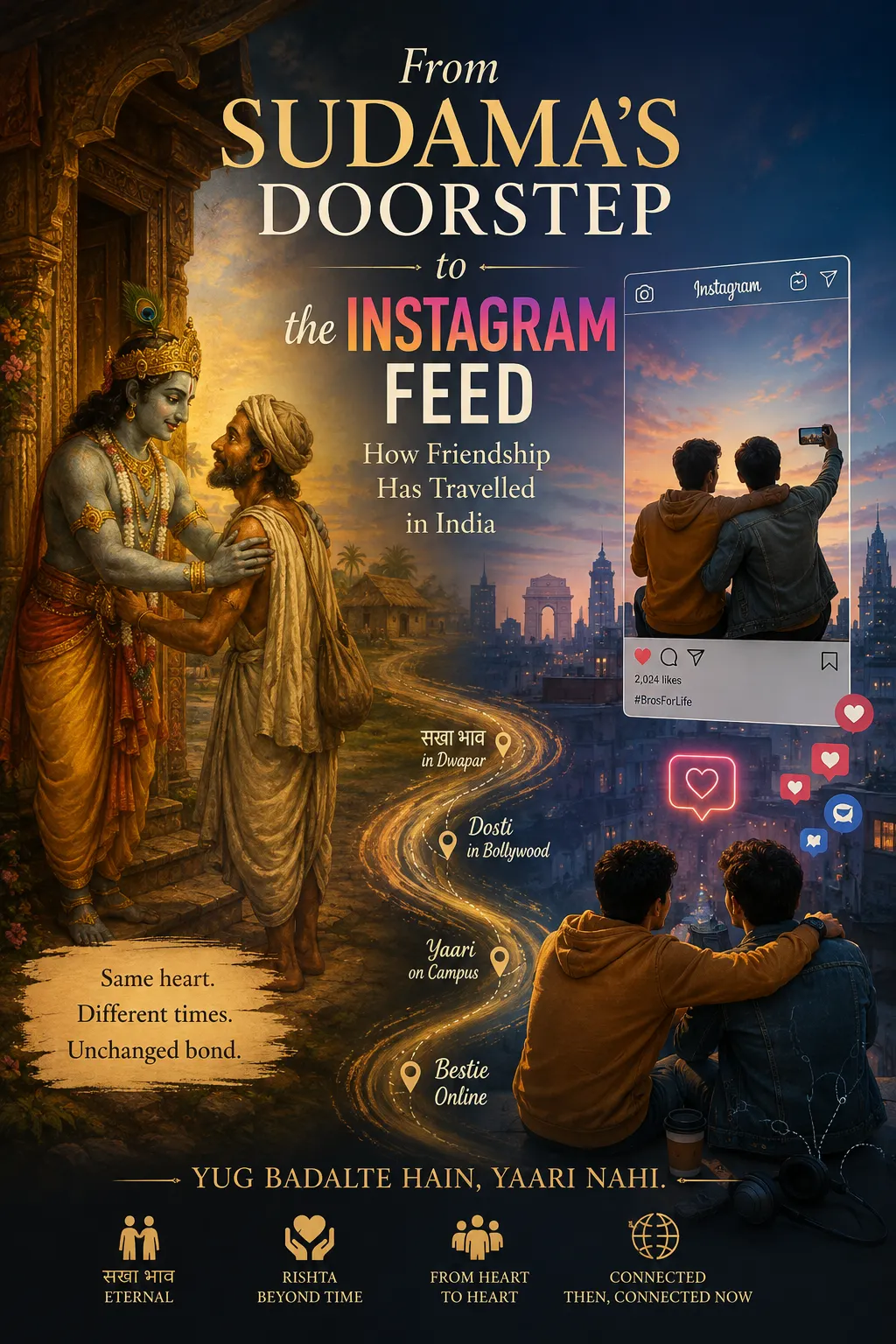
The King Who Ran Barefoot: Friendship’s Long Journey From Sudama to the Insta Feed — #happyfriendshipday
KARGIL VIJAY DIWAS

# Kargil Vijay Diwas: The Sunday We Could Not Spare