KARGIL VIJAY DIWAS
# Kargil Vijay Diwas: The Sunday We Could Not Spare
09 Oct 2026 • 6 min read
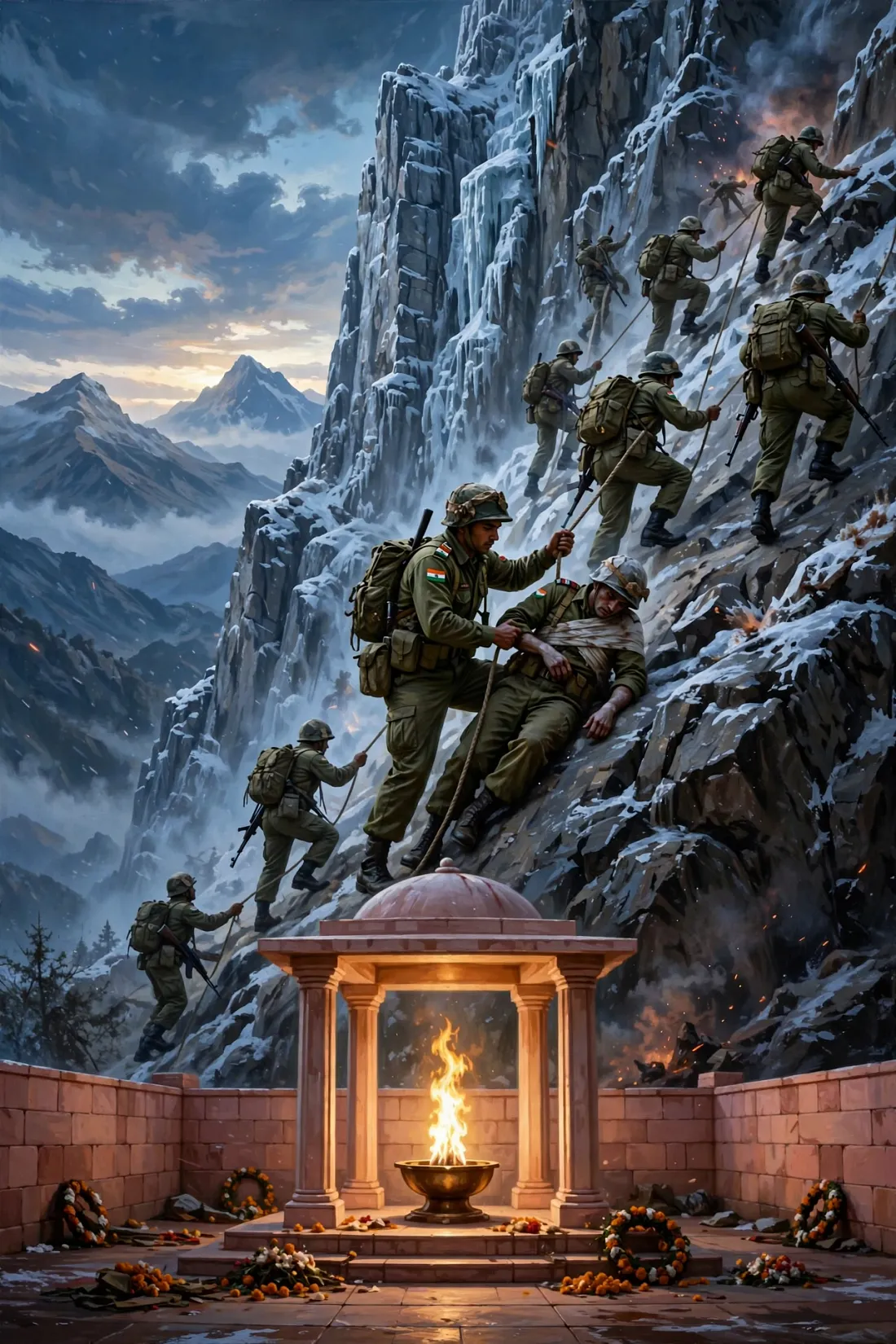
Captain Vikram Batra did not ask for a convenient day to die. He died on the seventh of July, 1999, at 17,000 feet, storming a Pakistani bunker at Point 4875, dragging a wounded comrade to safety before a bullet took him. The mountain did not check his calendar. And yet, this year, as Kargil Vijay Diwas falls on a Sunday, a nation of 1.4 billion people is quietly observing it on Saturday — because Sunday, apparently, is inconvenient.
The men who climbed to die: In the winter of 1998–99, Pakistani soldiers and militants crossed the Line of Control and occupied peaks in the Kargil–Dras sector of Ladakh. To take them back, Indian soldiers had to climb — not hike, but assault near-vertical cliff faces at altitudes where the air is thin enough to halve a man’s strength, where temperatures at night fell to minus forty degrees Celsius, where the enemy above had every advantage of height, cover, and time. They had to climb in full battle gear, in the dark, under machine gun fire, shouting battle cries to keep their hearts beating fast enough to sustain the ascent.
Eighty-seven days of this. Five hundred and twenty-seven Indian soldiers died. One thousand, three hundred and sixty-three were wounded. They ranged in age from eighteen to forty-two. They came from every state and every community in India. Some of their names deserve to be spoken today: Captain Vikram Batra, 13 JAK Rifles — Param Vir Chakra. Captured Tololing, Point 5140, and Point 4875. Died saving a wounded officer. Age 24. His last words: ‘Jai Mata Di.’ The mountain now bears his name. Captain Anuj Nayyar, 17 Jat Regiment — Maha Vir Chakra (Posthumous). When his men were pinned on Tiger Hill, he charged the bunker alone, lobbing grenades through the aperture. He was hit multiple times and continued. Age 23. Lieutenant Manoj Kumar Pandey, 1/11 Gorkha Rifles — Param Vir Chakra (Posthumous). Cleared four enemy positions before falling. His last words: ‘Na chhodnu.’ Don’t leave them. Age 24. Grenadier Yogendra Singh Yadav, 18 Grenadiers — Param Vir Chakra (living). Climbed a 16,500-foot cliff under fire, was hit by three bullets, continued to the top, destroyed the enemy post. Age 19. Captain Saurabh Kalia, 4 JAK Rifles — Captured with five soldiers while on patrol. Held for 22 days. His body bore marks of sustained torture. Age 22. His father has sought justice from the International Court of Justice for 27 years. He is still waiting.
These are not statistics. These are the specific human beings who make Kargil Vijay Diwas a day that belongs to the twenty-sixth of July, and not the twenty-fifth, and not to whichever Saturday is most logistically convenient for a school assembly.
The Flame That Does Not Move: The Kargil War Memorial stands at Dras in Ladakh — the second coldest inhabited place on earth — with Tololing and Tiger Hill visible on clear days in its backdrop. An eternal flame burns at its centre. Around it, carved in stone, are the names of every soldier who did not come home. The inscription reads: ‘These are not stars in the sky but flowers on the grave of our martyrs.’ That flame burns on the twenty-sixth of July. Every year. It does not observe the day on the twenty-fifth because the twenty-sixth is a Sunday. It burns on the twenty-sixth because that is when the war ended, and because the soldiers whose names surround it died on specific dates that are not negotiable. It is, in this sense, more disciplined than we are.
Kargil Vijay Diwas falls on a Sunday this year. Across the country’s schools, colleges, and civic organisations, events are being held on Saturday the twenty-fifth because ‘the twenty-sixth is a Sunday.’ Let us sit with that reasoning and examine what it contains. It contains the assumption that the date of the commemoration is negotiable. That July twenty-sixth is merely a label that can be attached to any proximate weekend day without loss of meaning. That assembling students in a hall, playing a recorded bugle call, and dispersing in time for brunch constitutes remembrance — and that this can be done on Saturday just as well as Sunday because its real content was always more about the performance of patriotism than its actual practice.
We do not move Diwali to the nearest convenient Thursday. We do not observe our parents’ death anniversaries on adjacent Fridays because Saturdays are better for the family gathering. We understand, in personal life, that dates carry meaning that is not infinitely transferable. We simply do not extend that understanding to dates that belong not to our families but to our nation.
Captain Vikram Batra was not given a convenient day to die. Grenadier Yogendra Singh Yadav was nineteen years old when he took three bullets and kept climbing. Lieutenant Manoj Kumar Pandey led his men up a ridge in the dark knowing several predecessors had already died there that night. None of them asked for a Saturday. When we move Kargil Vijay Diwas to Saturday because Sunday is inconvenient, we are asserting, in a very precise and measurable way, that our comfort outranks their sacrifice. We are saying: your death was important enough to remember, but not important enough to interrupt our plans for.
What the Flame Knows: Vikram Batra’s mother has not missed a single Kargil Vijay Diwas in twenty-seven years. She stands at his plaque on the twenty-sixth of July. Every year. She has never moved it to the twenty-fifth. Saurabh Kalia’s father rises early on the twenty-sixth, as he has done since 1999, to continue fighting a different kind of war — for justice that courts and governments have deferred with the same quiet convenience with which schools defer their assemblies. These families do not get a convenient day. They get the twenty-sixth of July because that is what they have. The day their sons went up and did not come down.
We can hold our events on Saturday. We can light our candles and display our photographs on the twenty-fifth, and go home in time for dinner, and feel that we have done our duty. Nothing will call us to account. Only our conscience will know that we could not spare a Sunday — and in that knowledge is the precise and uncomfortable measurement of the distance between what those soldiers gave us and what we were willing to give back. ‘Yeh dil maange more.’ This heart wants more. Captain Vikram Batra said this about life. We say it about our weekends. Jai Hind. Jai Jawan.
More Blogs
LETTER TO OUR POLITICIANS
Dear Leaders and Custodians of Governance
HAPPY FRIENDSHIP DAY
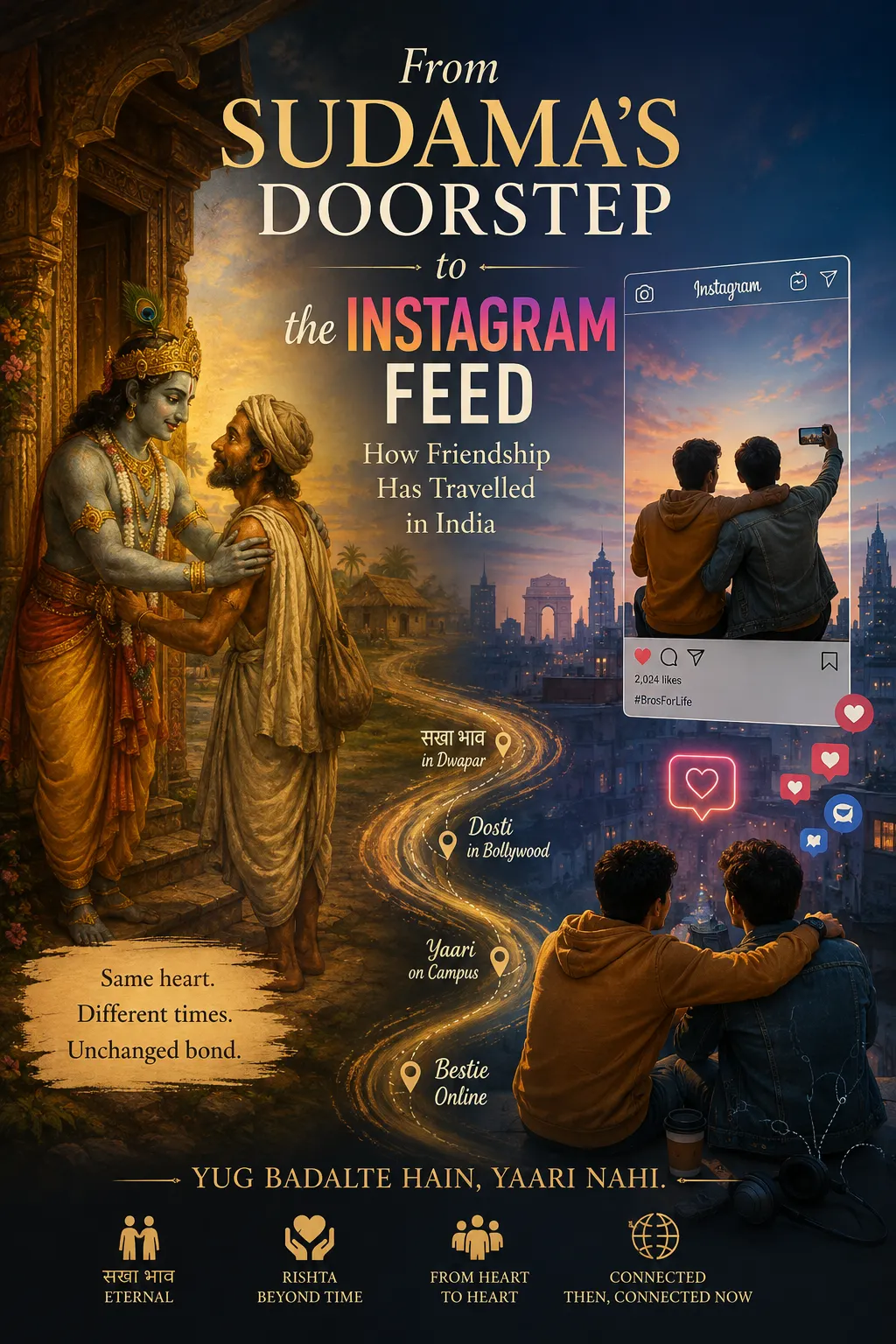
The King Who Ran Barefoot: Friendship’s Long Journey From Sudama to the Insta Feed — #happyfriendshipday
HISTORICAL COURAGE
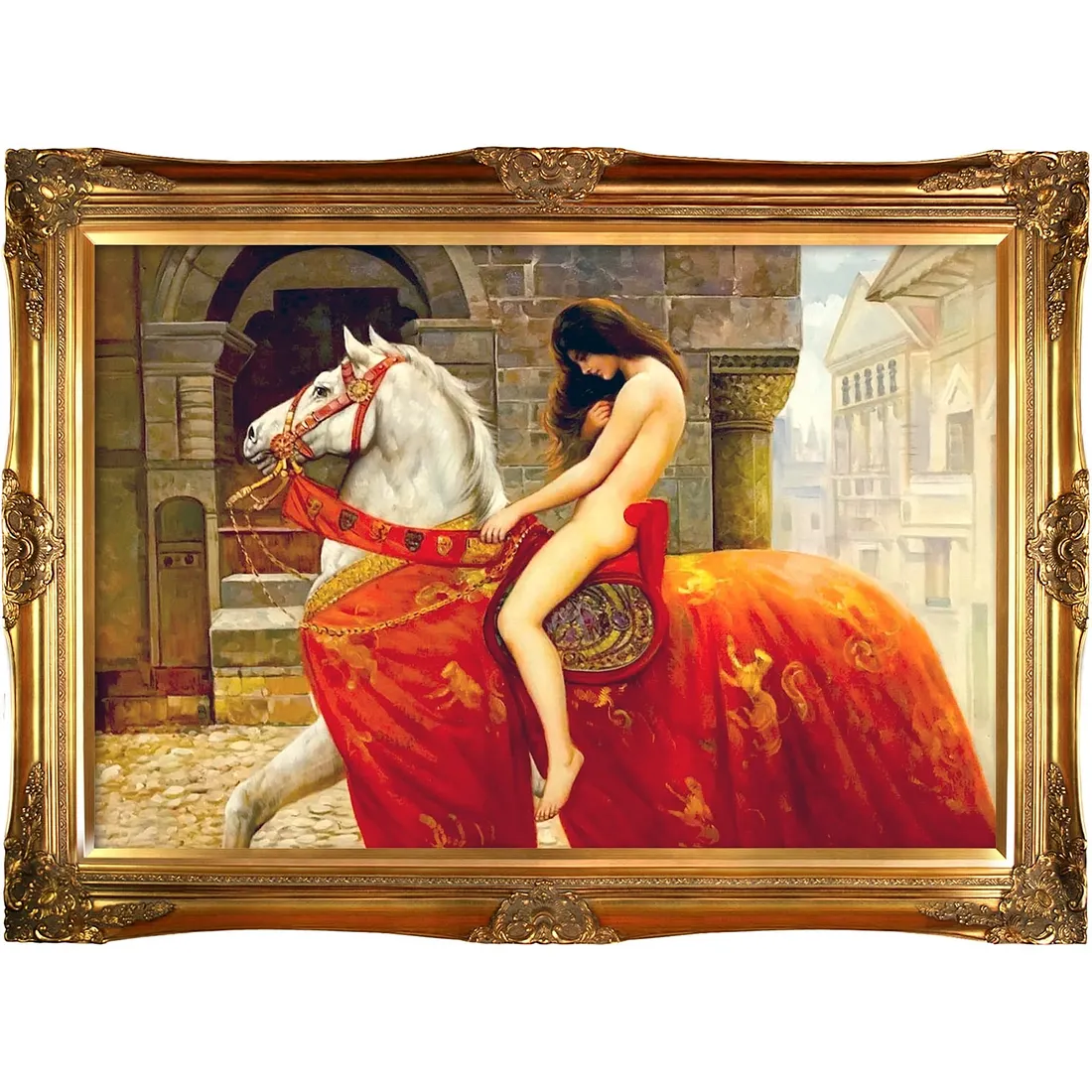
# Lady Godiva: The Woman Who Rode for Her People